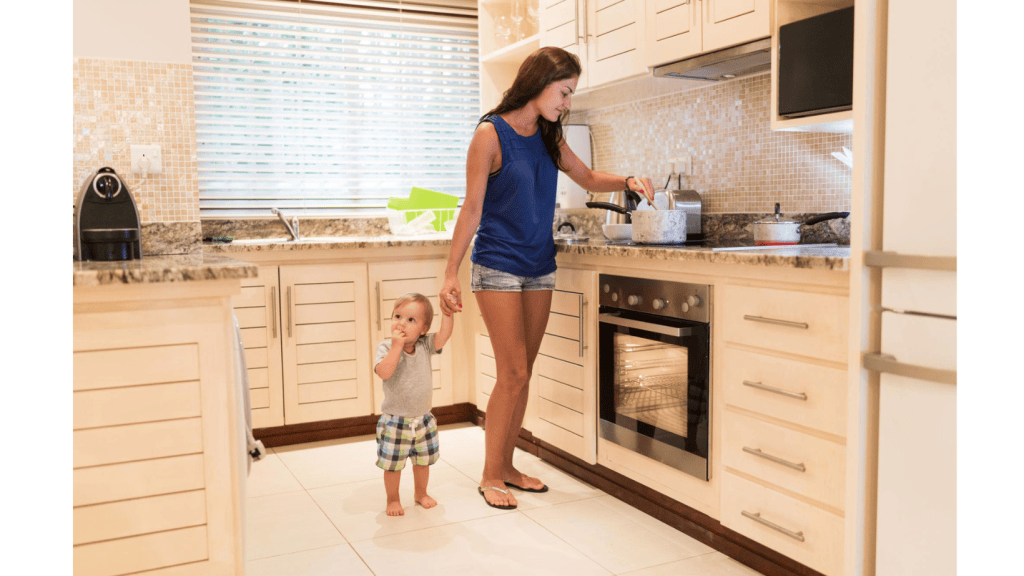
If you’re a mom of a toddler, you already know how difficult it can be to get anything done with a little one following you from room to room.
You start folding laundry, and suddenly your toddler needs a snack. You answer an email, and someone needs help finding their favorite cup. You begin making dinner, and your little helper is standing right beside you asking to be picked up.
I’ve been there.

Hi! Im Velvet Mumma.
Mom. Early Childhood Specialist. Blogger.
As a mom and early childhood educator, one thing I’ve learned is that we don’t have to entertain our children every minute of the day. In fact, giving toddlers opportunities to play independently can be wonderful for their development.
Independent play gives children opportunities to explore, problem-solve, use their imagination, and become more confident doing things on their own.
And sometimes, Mom simply needs 15 minutes to make dinner, finish some work, fold the clothes—or enjoy a cup of coffee while it’s still warm.
The good news is that you don’t necessarily need another television show, tablet app, or expensive toy.
Here are 15 simple screen-free activities your toddler can enjoy while you get a few things done.
Before You Get Started
When I say “independent play,” I don’t necessarily mean unsupervised play.
Toddlers are curious little people who can turn just about anything into an adventure—and occasionally a safety hazard!
Always choose activities appropriate for your child’s age and developmental level. Avoid small objects that could become choking hazards, supervise activities involving water, and keep your toddler within sight or hearing when necessary.
The goal isn’t to leave your toddler completely alone. It’s to give them something interesting to explore without requiring you to direct every second of their play.

1. Make a Toddler Busy Basket
This may be one of the easiest activities on the entire list.
Grab a basket and walk around your house looking for safe everyday objects your toddler can explore.
Try things like:
- Plastic measuring cups
- Silicone spatulas
- Large wooden spoons
- Plastic bowls
- Washcloths
- Large plastic containers
- Whisks
- Measuring spoons that are securely attached together
You’d be surprised how interesting ordinary household objects can be to a toddler.
While your child explores, they’re also practicing fine-motor skills, problem-solving, and imaginative play.
Mumma Tip: Don’t put everything in the basket at once. Rotate the objects every few days so the basket feels new again.
2. Give the Toys a Bath
Toddlers and water seem to find each other.
Place a small amount of water in a shallow container and add several washable plastic toys. Give your toddler a washcloth or small sponge and let them give their toys a bath.
You can even add an empty cup for pouring.
This is especially convenient when you’re working nearby in the kitchen.
Your toddler gets a sensory activity while practicing pouring, squeezing, scrubbing, and transferring.
Important: Water activities require close adult supervision, even when only a small amount of water is being used.
3. Try Painter’s Tape Rescue
This activity takes just a couple of minutes to prepare.
Use painter’s tape to lightly attach several larger toys to a table, wall, or high-chair tray.
Then tell your toddler:
“Can you rescue them?”
Your child gets to pull, peel, tug, and problem-solve until all the toys are free.
Peeling tape also gives those little fingers a great workout, which helps strengthen the muscles they’ll eventually use for drawing and writing.
4. Create a Cardboard Box Coloring Station
Before you throw away that large delivery box, give it to your toddler.
Place your child inside or beside the box with washable crayons and let them decorate it.
They can scribble, draw, make lines, or simply explore what happens when a crayon touches cardboard.
And when they’re finished coloring?
That same box can become a car, boat, house, rocket ship, store, or cozy reading spot.
Sometimes the simplest materials create the longest-lasting play.
5. Set Up Water Painting
No paint required!
Give your toddler a chunky paintbrush and a small container of water.
Outside, they can “paint” the sidewalk, fence, porch, rocks, or other safe surfaces.
Indoors, try letting them paint water onto construction paper or cardboard while you sit nearby.
The water disappears as it dries, which means your toddler can paint the same surface again and again.
Simple, inexpensive, and wonderfully low-mess.
6. Let Them Match the Socks
Sometimes the best toddler activities aren’t activities at all—they’re real life.
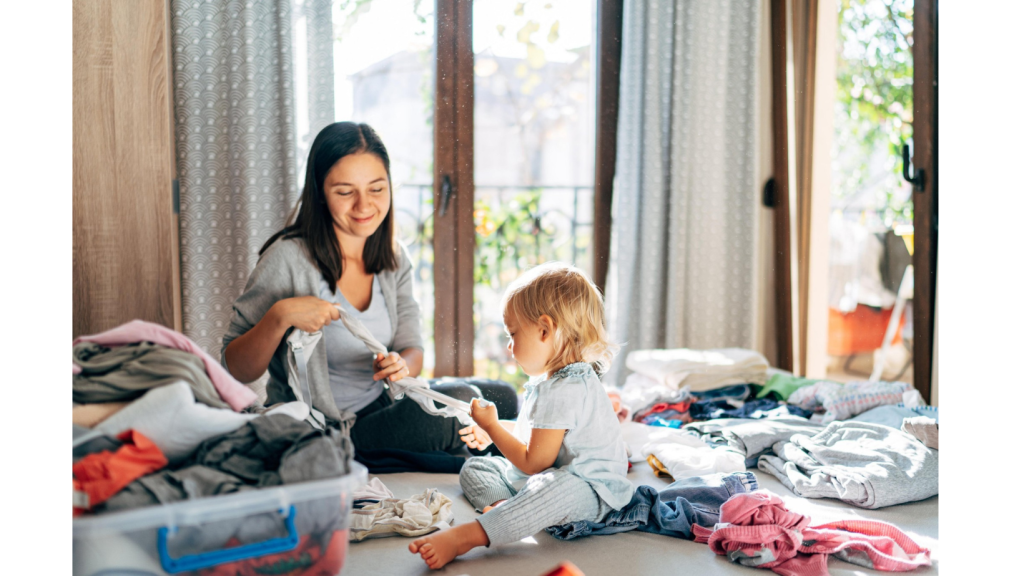
When you’re folding laundry, place several easy-to-match pairs of socks in a small pile.
Ask your toddler:
“Can you find the ones that are the same?”
Don’t worry if your little one isn’t actually matching them correctly yet.
They’re looking at colors, patterns, sizes, and similarities while participating in something you’re already doing.
And you’re getting the laundry folded at the same time.
That’s a Mumma win.
7. Make a Reusable Sticker Station
Toddlers often LOVE stickers.
Instead of regular stickers that end up attached to everything in the house, try large reusable stickers or window clings.
Let your toddler place them on an appropriate smooth surface, remove them, rearrange them, and start over.
You can also talk about what your toddler sees:
“Where’s the dog?”
“Can you find the red one?”
“Which one is big?”
Without turning it into a formal lesson, you’ve added vocabulary, colors, matching, and early concepts to playtime.
8. Bring Out the Play Dough
Play dough is a classic for a reason.
Give your toddler a small amount of play dough along with a few simple tools, such as a child-safe rolling pin or large cookie cutters.
Toddlers can:
Squish it.
Roll it.
Pat it.
Pull it.
Make pretend food.
Cut out shapes.
All that squeezing and manipulating strengthens little hands and fingers.
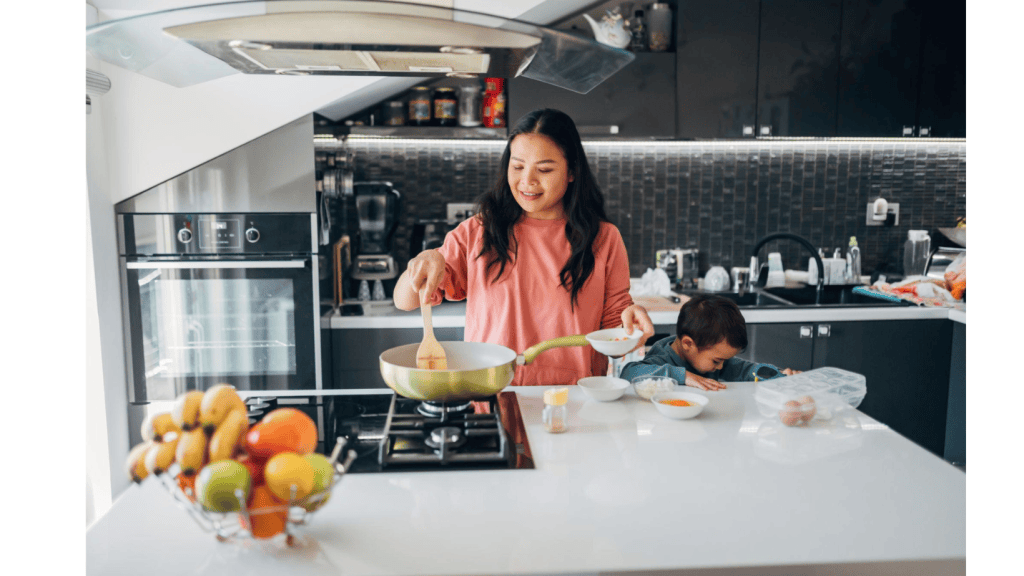
Set your toddler up at the kitchen table while you’re cooking or working nearby, and you may buy yourself a nice little stretch of productive time.
Always supervise children who may still put play dough or tools in their mouths.
9. Create a Special Book Basket
Choose five or six sturdy board books and place them in a special basket.
Here’s the trick:
Don’t leave this basket available all day.
Bring it out during a particular part of your routine—perhaps while you’re making breakfast, answering emails, or getting dressed.
Because these books aren’t constantly available, they can feel a little more special.
Rotate the books periodically to keep your toddler interested.
Even if your toddler can’t read yet, turning pages, studying pictures, and pretending to read are important early-literacy experiences.
10. Make a Kitchen Helper Drawer
If your toddler wants to be right beside you every time you cook, work with that instead of fighting it.
Choose one low drawer or cabinet and make it toddler-friendly.
You might include:
- Plastic bowls
- Measuring cups
- Silicone utensils
- Plastic storage containers
- Large spoons
- Muffin tins
While you’re making dinner, your toddler can make dinner too.
Watch as a mixing bowl becomes a drum, a spoon becomes a microphone, and plastic containers become building blocks.
That’s toddler imagination at work.
11. Set Out Simple Puzzles
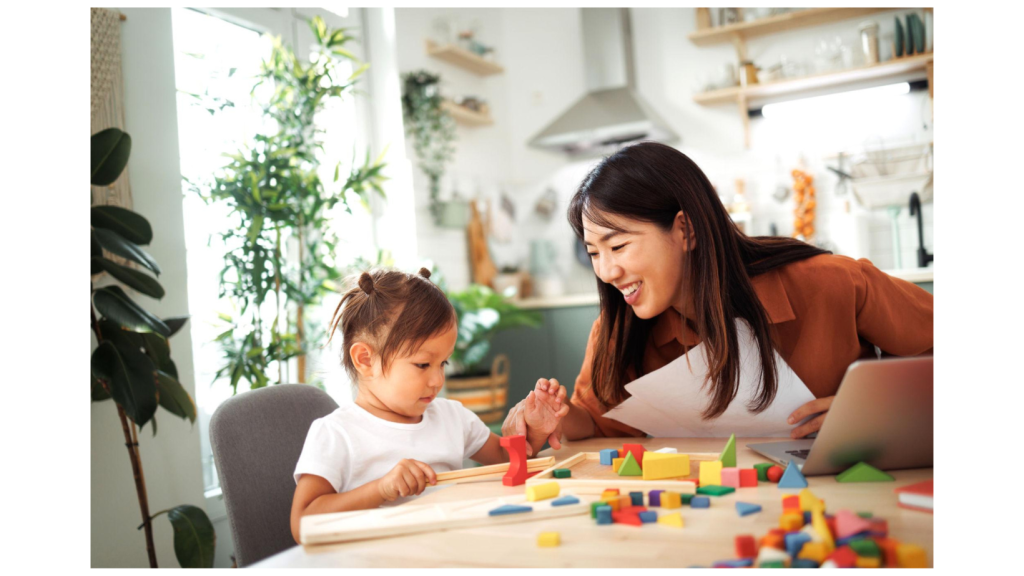
Keep a few age-appropriate puzzles available for quiet play.
Chunky wooden puzzles, knob puzzles, simple inset puzzles, and shape sorters are especially useful for younger toddlers.
Puzzles help children practice:
- Hand-eye coordination
- Fine-motor skills
- Matching
- Spatial awareness
- Persistence
- Problem-solving
You don’t always have to show your child where every piece goes.
Give them a little time to experiment.
Figuring something out independently is part of the learning.
12. Make a Stuffed-Animal Care Station
Toddlers love imitating the people who care for them.
Set out a favorite stuffed animal or doll with a few safe caregiving items.
Your toddler can pretend to:
Feed the baby.
Cover the baby with a blanket.
Put the baby to sleep.
Brush the baby’s hair.
Read the baby a book.
Give the baby a hug.
Pretend play supports language, imagination, social-emotional development, and children’s understanding of everyday routines.
Meanwhile, you can get something done nearby.
13. Create a Safe Sorting Activity
Sorting is an early math skill, but your toddler doesn’t need a worksheet to practice it.
Give your toddler a collection of large, age-appropriate objects and two or three containers.
You might sort large blocks by color, toy animals by type, or big toy cars by size.
For younger toddlers, forget the rules altogether.
Let them simply put objects in containers, dump them out, and start again.
That simple “in and out” play is learning too.
Avoid coins, buttons, small pom-poms, beads, and other choking hazards.
14. Give Your Toddler a “Mommy’s Helper” Job
This one may be my favorite.
Instead of trying to keep your toddler occupied somewhere else, invite them into what you’re already doing.
Give them a tiny job.
If you’re cleaning, hand them a dry cloth and let them wipe a safe surface.
If you’re doing laundry, ask them to put washcloths in a basket.
If you’re cooking, let them carry an unbreakable item to the table.
If you’re organizing, let them put safe objects into a container.
Toddlers often don’t want elaborate entertainment.
They want to be part of our world.
Giving your toddler meaningful little responsibilities builds independence and confidence while teaching practical life skills.
15. Make a Toddler Busy Binder
A toddler busy binder is perfect for those moments when you need a quiet activity that doesn’t involve a screen.
Fill a binder with simple, age-appropriate activities involving:
- Colors
- Shapes
- Animals
- Matching
- Emotions
- Numbers
- Same and different
- Big and small
- Simple patterns
- Everyday objects
You can laminate the pages and use hook-and-loop pieces to make some of the activities reusable.
A busy binder is especially useful while you’re working from home, preparing dinner, waiting at appointments, traveling, or simply needing a quieter activity.
And because you can change the activities as your child grows, it can last much longer than a one-time worksheet.
How Long Should a Toddler Play Independently?
Don’t expect your toddler to suddenly entertain themselves for an hour because you put out a basket of measuring cups.
Independent play is something children can build over time.
If your toddler currently plays independently for only a few minutes, start there.
You might sit nearby while your child plays. Over time, you can become less involved while still remaining available and supervising as appropriate.
And don’t compare your toddler with someone else’s child.
One toddler may happily play with blocks for 30 minutes. Another may be finished after five.
Both can be perfectly normal.
The goal isn’t to see how long we can keep our children occupied.
The goal is to help them discover:
“I can play. I can explore. I can figure things out.”
You Don’t Have to Entertain Your Toddler All Day
Mumma, hear me on this one.
Being a good mom does not mean creating Pinterest-perfect activities from morning until bedtime.
Your toddler doesn’t need you to provide constant entertainment.
They need opportunities to explore their world, use their imagination, practice doing things independently, and—yes—occasionally get a little bored.
Some of the best childhood play begins when there isn’t an adult standing nearby telling a child exactly what to do.
Give them the cardboard box.
Let them stir an empty bowl beside you.
Let them look at books while you drink your coffee.
Let them “help” fold the laundry, even when their version of folding isn’t exactly helpful yet.
These ordinary moments are where so much learning happens.
Final Thoughts
Motherhood comes with a never-ending list of things that need to be done.
There will always be another load of laundry, another meal to make, another email to answer, and another room that somehow became messy five minutes after you cleaned it.
You don’t have to choose between getting things done and helping your toddler learn.
With a few simple screen-free activities, you can give your little one meaningful opportunities to play and learn while giving yourself enough breathing room to accomplish something too.
And remember: you don’t need expensive toys or complicated activities to help little minds grow.
Sometimes all you need is a cardboard box, a wooden spoon, a few books—and a curious little toddler.


Leave a Reply