Simple Ways to Build Confidence, Independence, and Life Skills
Have you ever noticed that the moment you step into the kitchen, your preschooler isn’t far behind? Whether they’re dragging a chair across the floor to “help,” asking to stir the batter, or proudly carrying a spoon that’s almost bigger than they are, little ones naturally want to be involved. While it may take a little extra time (and create a few extra messes!), those moments are some of the best opportunities for learning.
Hi! I’m Velvet Mumma.
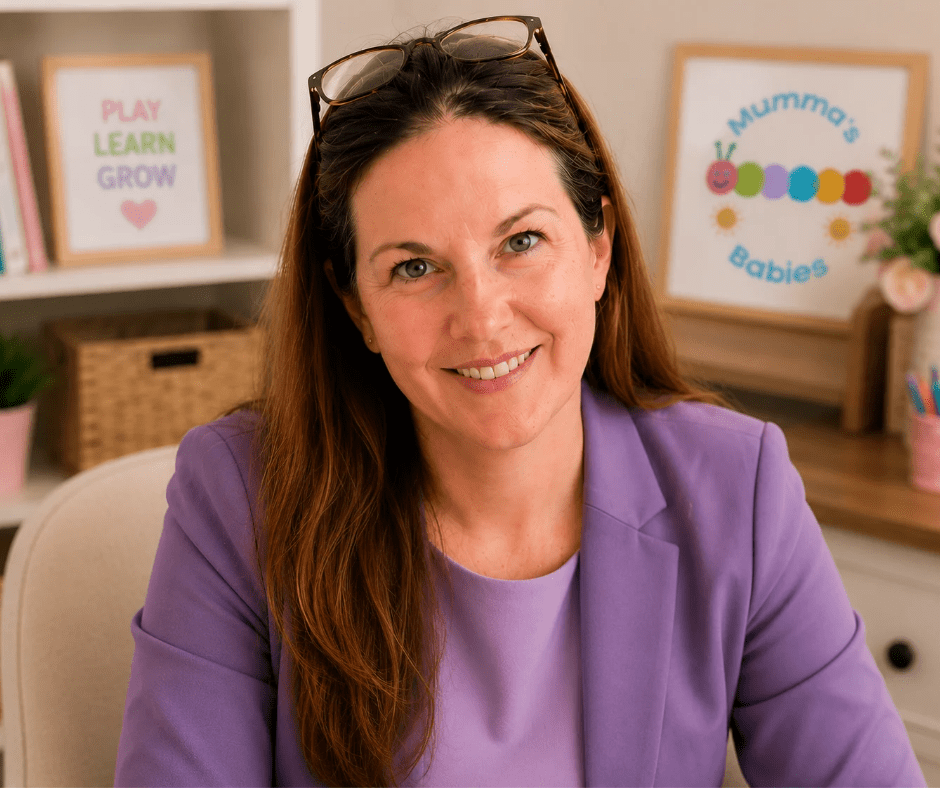
Mom. Early Childhood Specialist. Blogger.
Through both my professional experience and my own journey as a mother, I’ve learned that some of the most valuable lessons don’t happen at a desk—they happen during everyday moments at home.
The kitchen is one of my favorite places to encourage learning because it offers so much more than a chance to make dinner. As children stir, pour, measure, wash, and help prepare meals, they’re developing fine motor skills, strengthening language, practicing early math concepts, learning responsibility, and growing in confidence. Best of all, they’re creating memories with the people they love most.
In this article, I’ll share simple, age-appropriate kitchen activities that preschoolers can safely help with, along with the important developmental skills each activity encourages. My hope is that by the end, you’ll see your kitchen not just as a place to cook—but as one of the best classrooms your child will ever have.
So grab an apron, expect a little flour on the counter, and let’s raise confident, capable little helpers—one recipe at a time. ❤️
Why the Kitchen Is One of the Best Classrooms
When most people think about learning, they picture a classroom with books, pencils, and worksheets. But as an early childhood educator, I can tell you that some of the most meaningful learning happens long before a child ever sits at a school desk. It happens in the everyday moments—especially in the kitchen.
The kitchen is full of opportunities for children to explore, ask questions, solve problems, and practice important life skills. While they may think they’re simply helping make dinner or bake cookies, they’re actually building the foundation for future success in school and in life.
Children are naturally curious, and they love doing what the grown-ups are doing. When we invite them to help, we’re showing them that they are capable, trusted, and an important part of the family.
Here are just a few of the valuable skills your preschooler is developing while helping in the kitchen:
Independence
Children love feeling capable. Completing simple kitchen tasks—like pouring ingredients, stirring a bowl, or setting the table—helps them realize, “I can do this myself!” These moments foster independence and encourage them to take initiative in other areas of life.
Responsibility
Helping prepare meals teaches children that every family member has an important role. They begin to understand that caring for a home means working together, cleaning up after themselves, and contributing in meaningful ways.
Fine Motor Skills
Cooking is packed with opportunities to strengthen little hands. Stirring, whisking, peeling, pinching, pouring, scooping, and spreading all develop the small muscles needed later for writing, cutting with scissors, buttoning clothes, and other everyday tasks.
Language Development
The kitchen is full of new words and meaningful conversations. As you cook together, your child hears vocabulary like measure, mix, slice, peel, ingredients, and recipe. Talking about colors, textures, smells, and tastes also helps expand their language skills while encouraging curiosity and communication.
Early Math Skills
Without even realizing it, preschoolers are introduced to early math concepts every time they cook. They practice counting scoops, measuring ingredients, recognizing numbers on measuring cups, comparing sizes, learning about fractions, and understanding concepts like more, less, full, and empty.
Science Exploration
Cooking is one big science experiment! Children discover how ingredients change when they’re mixed together, how liquids and solids behave differently, and what happens when heat transforms food. These everyday experiences spark curiosity and lay the foundation for future scientific thinking.
Following Directions
Recipes teach children to listen carefully, follow steps in order, and complete tasks one at a time. These important skills support classroom success and help develop focus, patience, and problem-solving abilities.
Confidence
Every completed task gives children a wonderful sense of accomplishment. Whether they crack an egg, decorate a pizza, or proudly serve dinner to the family, they begin to believe in their own abilities. Confidence grows one successful experience at a time.
Building Family Connections
Perhaps the greatest benefit of all is the time spent together. Cooking creates opportunities to laugh, tell stories, sing songs, and enjoy meaningful conversations without the distractions of everyday life. These shared moments strengthen your relationship and help your child feel loved, valued, and included.
I saw this firsthand with my own son. From the time he was a preschooler, he loved standing beside me in the kitchen. At first, his jobs were simple—washing vegetables, stirring ingredients, and helping pour pre-measured items into a bowl. He wasn’t just learning how to cook; he was learning confidence, responsibility, and that he had an important place in our family.
Today, he’s a teenager, and the kitchen is still one of his favorite places to be. He enjoys preparing meals, trying new recipes, and helping our family in ways that began with those small moments years ago. Looking back, I’m so thankful I chose progress over perfection and invited him to help, even when it meant extra spills and a little more mess to clean up.
Those little helping hands didn’t stay little forever, but the confidence and life skills he developed have stayed with him.
The Memories Matter Most
Years from now, your child probably won’t remember exactly what you cooked—but they’ll remember how it felt to stand beside you, helping, learning, and belonging.
The kitchen isn’t just where meals are made. It’s where confidence grows, life skills are learned, and family memories are created—one recipe at a time.
Kitchen Safety Comes First
Before we hand our little ones a mixing spoon or invite them to help make dinner, there’s one thing we need to teach first: kitchen safety.
The kitchen is a wonderful place for learning, but it can also be filled with potential hazards. The good news is that with a few simple rules and close supervision, your preschooler can safely become one of your favorite kitchen helpers.
I like to think of kitchen safety the same way I think about teaching children to cross the street. We don’t avoid streets forever—we teach children how to cross them safely. The kitchen is no different. By teaching good habits early, you’re helping your child build confidence while learning to respect their surroundings.
Here are a few simple kitchen rules every preschooler can learn:🧼 Wash Hands FirstEvery kitchen adventure should begin with clean hands. Show your child how to wash with warm water and soap for at least 20 seconds before touching food.
This simple habit teaches good hygiene and helps prevent the spread of germs.
🔥 Stay Away from Hot Surfaces
Explain that the stove, oven, toaster, and hot pans are “grown-up only” areas.
Use Child-Safe Utensils
Choose tools designed for little hands whenever possible.
Carry One Thing at a Time
Young children often get excited and want to carry everything at once.
Teach them to slow down and carry just one item at a time, using both hands whenever possible.
Clean Up Spills Right Away
Spills happen—and that’s okay!
Instead of becoming frustrated, use spills as learning opportunities.
Show your child how to grab a towel and wipe up water, flour, or crumbs before someone slips.
Wear Shoes While Cooking
Little feet are much safer when they’re protected.
A dropped spoon, a spilled drink, or an accidentally stepped-on toy can hurt tiny toes. Wearing shoes in the kitchen adds an extra layer of protection.
Always Ask Before Tasting
Teach your preschooler to ask before tasting ingredients.
Some foods need to be cooked first, while others may be too hot to eat safely.
Adult Supervision Is Always Required
No matter how independent your preschooler becomes, kitchen activities should always happen with an adult nearby.
Your role isn’t just to keep your child safe—it’s also to encourage, guide, answer questions, and celebrate their successes along the way.
Remember, the goal isn’t to create a perfect little chef overnight. It’s to help your child build safe habits that will serve them for years to come.
When children learn that the kitchen is a place for both fun and responsibility, they’re more likely to become confident, capable helpers who enjoy cooking with the people they love.
Fruit and Vegetable Helper
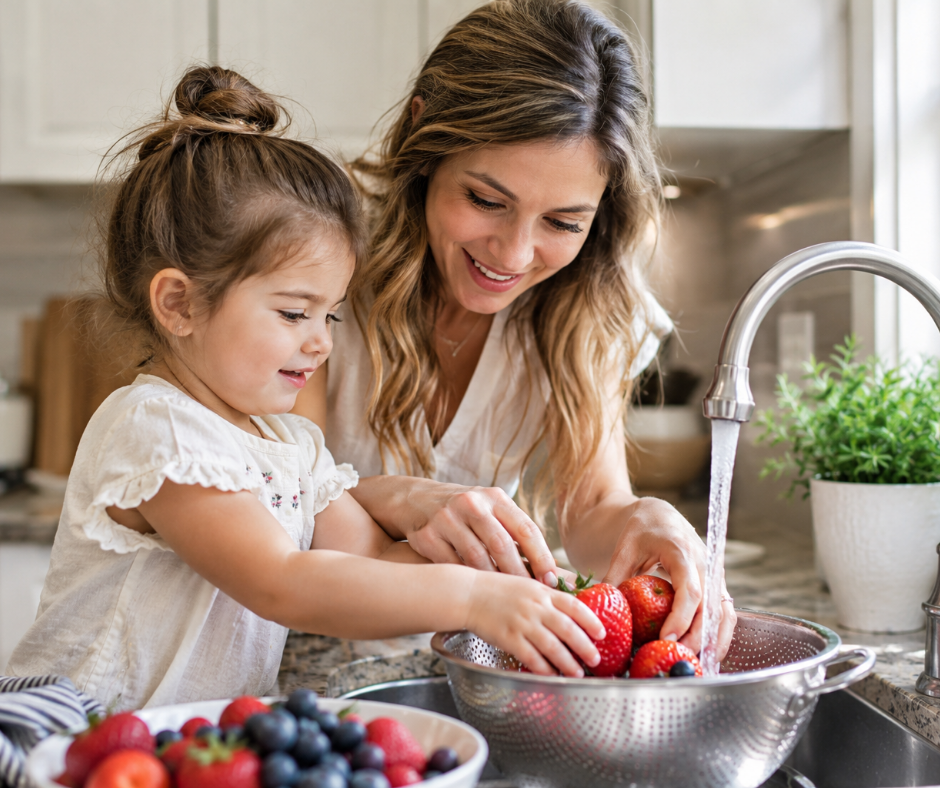
If your preschooler loves to be involved in everything you do, the produce drawer is a great place to start! Fruits and vegetables are colorful, easy to handle, and offer plenty of opportunities for little hands to help safely.
Simple jobs like washing strawberries or tearing lettuce may seem small, but they’re helping your child build confidence while learning healthy habits that can last a lifetime.
As you work together, talk about the colors, textures, smells, and shapes of each fruit or vegetable. Ask questions like, “Is this carrot rough or smooth?” or “Which apple is bigger?” These simple conversations help build language skills while making the activity even more engaging.
Little Baker
There’s something magical about baking with young children. Whether you’re making muffins, cookies, or homemade pizza, baking turns everyday ingredients into delicious treats—and every step is a learning opportunity.
Don’t worry if the flour ends up on the counter or a few chocolate chips disappear before they make it into the bowl. Those moments are part of the fun!
As you bake together, encourage your child to predict what will happen.”What do you think will happen when we put this in the oven?”
These conversations build curiosity and early scientific thinking.
Snack Maker
Preschoolers love making their own snacks because it gives them a sense of independence. Best of all, many simple snacks require very little adult assistance.
When children help prepare their own food, they’re often more willing to taste new foods because they had a role in making them.
Table Setter
Setting the table is one of the easiest kitchen jobs for preschoolers and a wonderful way to introduce early math concepts without worksheets.
Invite your child to help by:
- Counting plates
- Matching forks with spoons
- Folding napkins
- Carrying cups
- Setting placemats
- Placing chairs around the table
- Putting out straws or utensils
Little Dishwasher
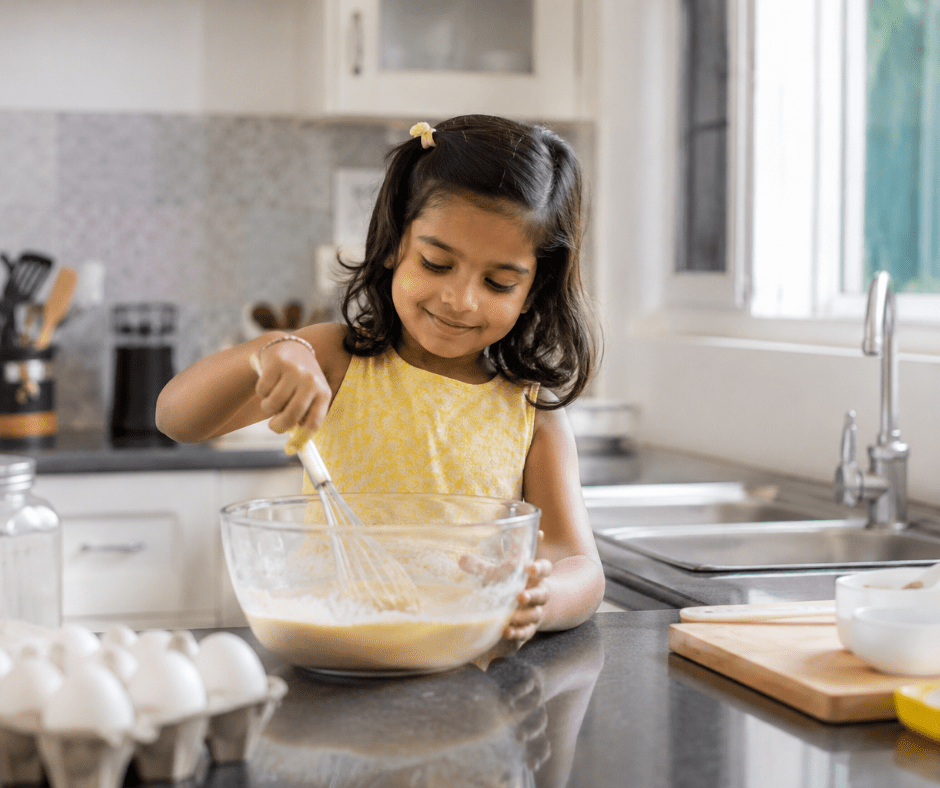
Water play is already one of preschoolers’ favorite activities, so it’s no surprise they love helping with dishes.
Of course, leave sharp knives and breakable dishes for adults, but let your child help with safe items.
Don’t worry if the dishes aren’t perfectly dry. The goal isn’t perfection—it’s participation.
Grocery Helper
The learning doesn’t stop once you leave the kitchen.A trip to the grocery store is full of opportunities to teach vocabulary, math, observation, and responsibility.
Before you leave, let your preschooler help:Write or draw a grocery listCount how many items you needLook through the pantry.
At the store they can:
- Find red apple
- Count bananas
- Compare large and small boxes
- Help place groceries in the cart
- Identify letters on signs
- Help unload groceries at home
These everyday errands become meaningful learning experiences when children are included.
Kitchen Scientist
The kitchen is one of the best places to introduce science because children can actually see changes happen before their eyes.
Encourage curiosity by observing things like:
Ice melting
- Butter melting
- Bread dough rising
- Water freezing
- Popcorn popping
- Mixing oil and water
- Baking soda reacting with vinegar
- Food changing color while cooking
Ask questions like:”Why do you think that happened?””What do you think will happen next?”
Children don’t need to memorize scientific facts. They simply need opportunities to wonder and explore.
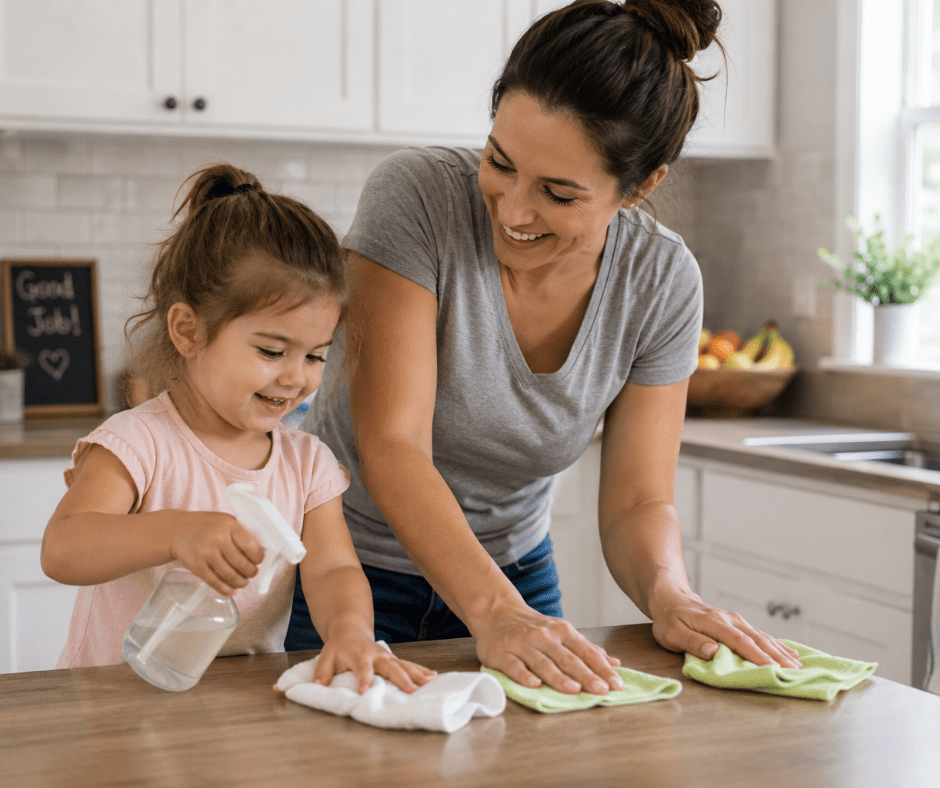
Cleaning Crew
One of the greatest gifts we can give our children is teaching them that helping is part of being a family.
Cleaning up after cooking isn’t punishment—it’s simply the final step in the job.
At the end of the day, don’t focus on whether every crumb was swept or every towel was folded perfectly. Focus on the smile that comes from hearing, “Thank you for helping.”
Those words remind children that they are capable, needed, and an important part of the family—and that’s a lesson far more valuable than a perfectly clean kitchen.
What Skills Are Children Really Learning?
It might look like your preschooler is simply stirring pancake batter or washing strawberries, but beneath those everyday tasks, something much bigger is happening.
Every time your child helps in the kitchen, they’re practicing skills that will benefit them far beyond mealtime. They’re developing the confidence to try new things, the patience to follow directions, and the independence they’ll need at home, at school, and eventually in adulthood.
As an early childhood educator, I often remind parents that young children learn best by doing. They don’t need elaborate lessons to develop important skills—they simply need opportunities to participate in meaningful, everyday experiences.
Here’s what your little kitchen helper is really learning.❤️ Fine Motor SkillsStirring, pouring, peeling, scooping, squeezing, and using measuring spoons strengthen the small muscles in your child’s hands and fingers.
These muscles are essential for future skills like:
- Holding a pencil
- Cutting with scissors
- Buttoning clothes
- Tying shoes
- Writing their name
Hand-Eye Coordination
Kitchen jobs require children to coordinate what they see with how they move.Whether they’re pouring milk into a measuring cup or placing blueberries into muffin tins, they’re improving coordination and control.
Language Development
Cooking introduces children to rich vocabulary they may not hear every day.
As you talk together, ask questions, and describe each step, your child’s vocabulary grows naturally.
Early Math Skills
The kitchen is full of math!
Children learn to:
- Count ingredients
- Compare sizes
- Recognize shapes
- Measure quantities
- Sort foods
- Understand more and less
- Notice patterns
These concepts become much easier to understand because children can see and touch them.
Science Concepts
Every recipe is a science experiment waiting to happen.
They begin asking questions, making predictions, and discovering how the world works.
Listening and Following Directions
Recipes teach children to slow down and complete steps in order.
They learn to:
- Listen carefully
- Follow instructions
- Wait patiently
- Finish one task before starting another
These are valuable skills they’ll use every day in preschool and beyond.
Confidence
Perhaps the greatest lesson of all is confidence.
Years from now, they probably won’t remember every meal you cooked.But they’ll remember standing beside you on a step stool, proudly stirring the pancake batter, sneaking a blueberry when they thought you weren’t looking, and hearing you say, “I’m so glad you’re helping me.”
Those memories are just as valuable as the life skills they’re learning.
The kitchen isn’t just a place to prepare food.It’s a classroom where confidence grows, curiosity is encouraged, and little hands learn that they’re capable of doing big things.
Easy Snack Recipes Preschoolers Can Make with You
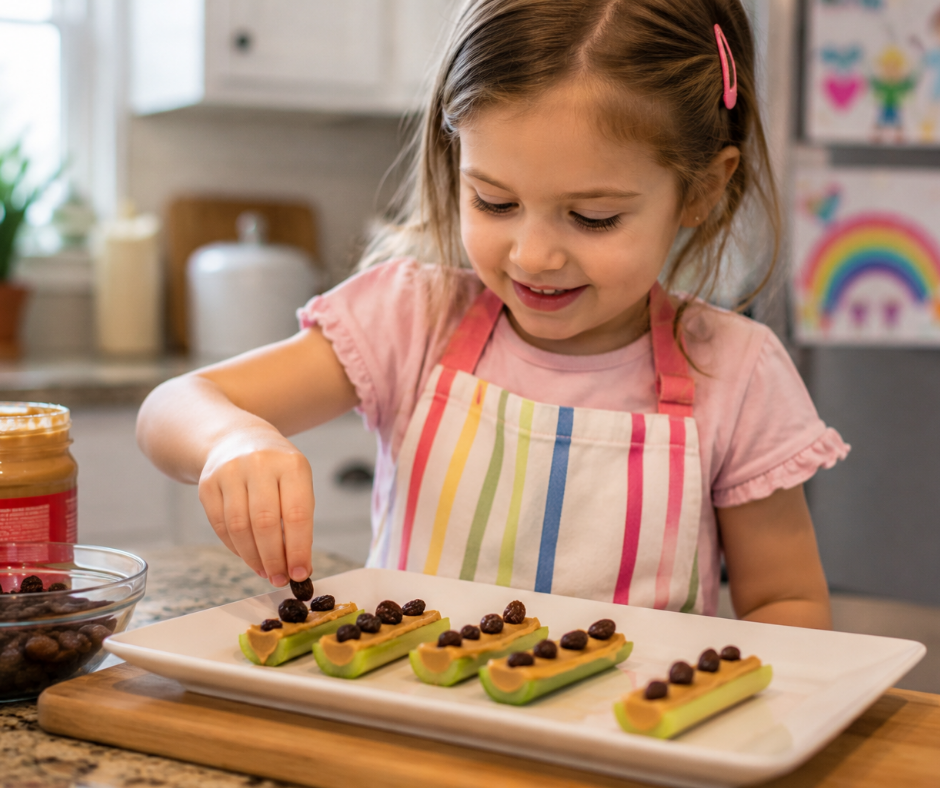
1. Ants on a Log
Ingredients
- 3 celery sticks
- Peanut butter (or sunflower butter/cream cheese)
- Raisins
Directions
- Wash the celery.
- Spread peanut butter inside each celery stick.
- Place raisins on top to make the “ants.”
- Enjoy!
Kids Can Help By
- Washing the celery
- Spreading the peanut butter
- Counting and placing the raisins
2. Rainbow Fruit Kabobs
Ingredients
- Strawberries
- Orange slices
- Pineapple chunks
- Green grapes
- Blueberries
- Wooden skewers or paper straws for younger children
Directions
- Wash all the fruit.
- Let children slide the fruit onto the skewer in rainbow order.
- Serve immediately.
Kids Can Help By
- Washing fruit
- Naming colors
- Creating colorful patterns
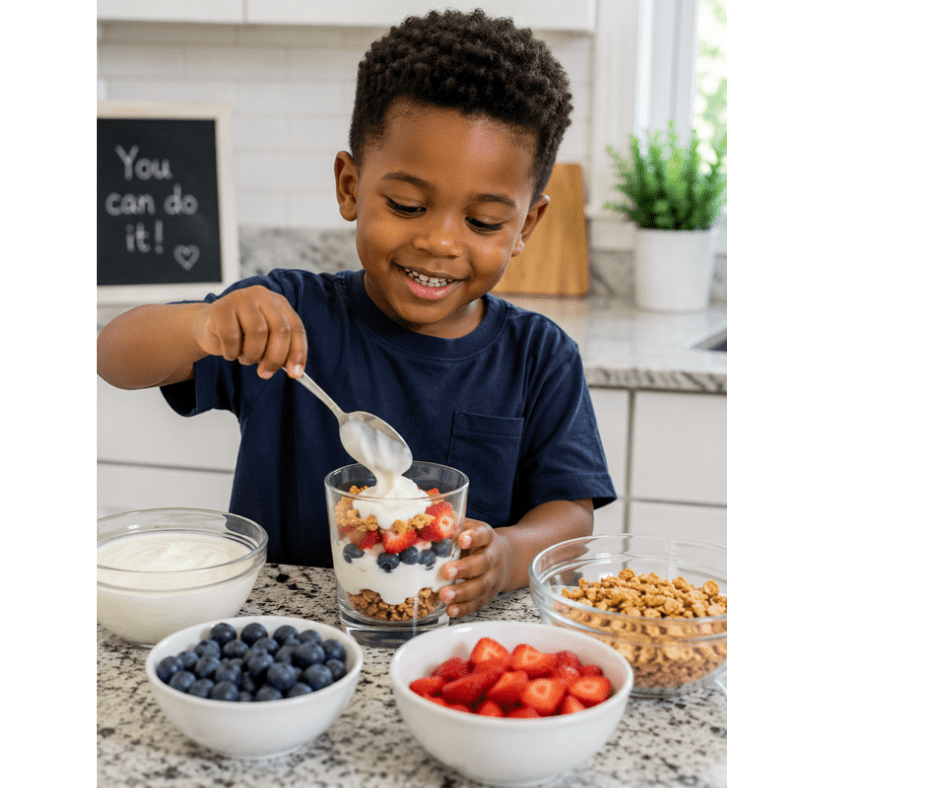
3. Yogurt Berry Parfaits
Ingredients
- Vanilla yogurt
- Strawberries
- Blueberries
- Granola
Directions
- Spoon yogurt into a clear cup.
- Add berries.
- Sprinkle granola on top.
- Repeat layers if desired.
Kids Can Help By
- Scooping yogurt
- Layering ingredients
- Counting spoonfuls
4. Mini English Muffin Pizzas
Ingredients
- English muffins
- Pizza sauce
- Mozzarella cheese
- Pepperoni or vegetables
Directions
- Spread sauce on each muffin half.
- Sprinkle cheese.
- Add favorite toppings.
- Bake at 375°F for 8–10 minutes with adult supervision.
Kids Can Help By
- Spreading sauce
- Sprinkling cheese
- Choosing toppings
5. Apple “Donuts”
Ingredients
- Apple slices (cored)
- Cream cheese or peanut butter
- Sprinkles
- Mini chocolate chips
- Granola
Directions
- Slice apples into rings.
- Spread cream cheese on top.
- Decorate with toppings.
Kids Can Help By
- Decorating
- Sorting toppings
- Making fun designs
6. Banana Sushi
Ingredients
- Tortilla
- Peanut butter or sunflower butter
- Banana
Directions
- Spread peanut butter over the tortilla.
- Place a banana in the center.
- Roll tightly.
- Slice into bite-sized pieces.
Kids Can Help By
- Spreading
- Rolling
- Counting slices
7. Cheese & Cracker Animals
Ingredients
- Crackers
- Cheese slices
- Cucumber slices
- Pretzel sticks
- Raisins
Directions
- Place cheese on crackers.
- Use vegetables and raisins to create funny animal faces.
- Enjoy your edible creations.
Kids Can Help By
- Creating faces
- Naming animals
- Using their imagination
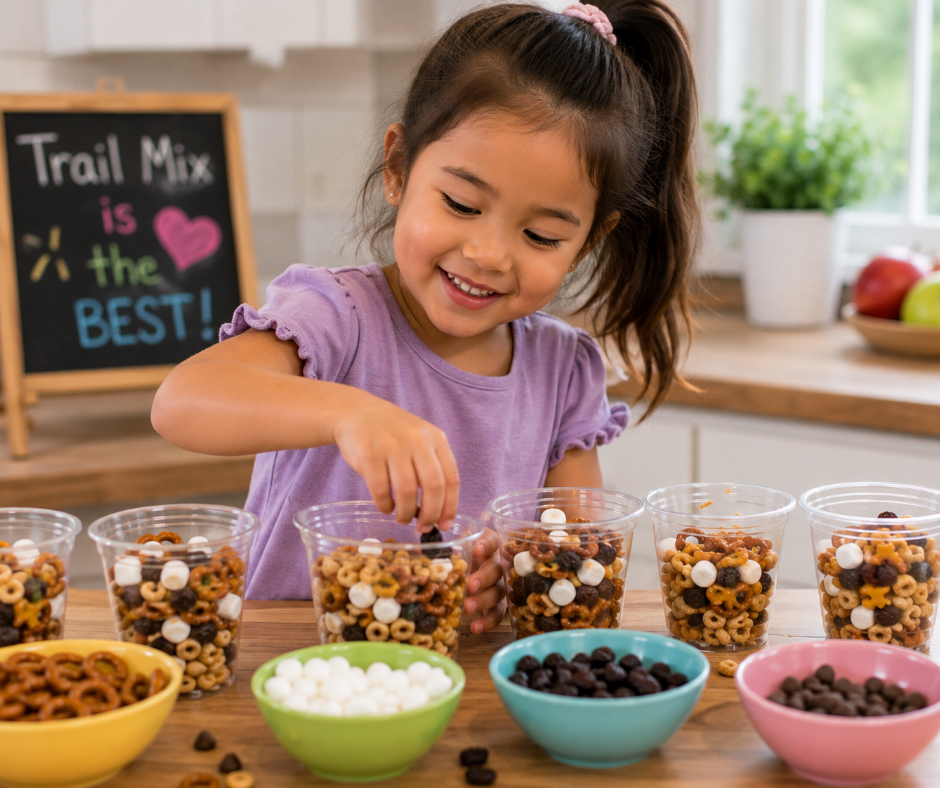
8. Trail Mix Cups
Ingredients
- Cheerios
- Pretzels
- Mini marshmallows
- Raisins
- Goldfish crackers
Directions
- Add each ingredient to a bowl.
- Stir together.
- Scoop into small cups or snack bags.
Kids Can Help By
- Measuring ingredients
- Pouring
- Mixing
- Counting scoops
Kitchen Learning Tip
While you’re making these snacks, don’t rush the process. Talk with your preschooler about what they’re doing. Ask questions like:
- “What color is this fruit?”
- “Can you count five blueberries?”
- “Which ingredient feels soft?”
- “What do you think will happen when we bake the pizza?”
These simple conversations build vocabulary, encourage critical thinking, and turn snack time into a meaningful learning experience—all while making lasting memories together.
Final Thoughts
Inviting your preschooler into the kitchen may mean a few extra spills, sticky countertops, and meals that take a little longer to prepare—but those moments are an investment in something far greater than dinner.
Every time your child stirs the batter, washes fruit, sets the table, or helps clean up, they’re building confidence, learning responsibility, strengthening important developmental skills, and discovering that they are a valuable part of your family. These everyday experiences lay the foundation for independence that will serve them for years to come.
As a mom, I’ve experienced this firsthand. My own son grew up helping in the kitchen from the time he was a preschooler. Those simple tasks slowly grew into real life skills, and today, as a teenager, he still loves spending time in the kitchen preparing meals and trying new recipes. Looking back, I’m so grateful I welcomed him into those everyday moments instead of worrying about the extra mess.
Remember, your goal isn’t to raise a perfect little chef overnight. Your goal is to raise a confident, capable child who isn’t afraid to try new things, contribute to the family, and enjoy learning alongside the people they love.


Leave a Reply