One of the most exciting milestones you’ll experience as a parent is hearing your baby’s first words. Whether it’s “Mama,” “Dada,” or another sweet first attempt at talking, those tiny words are the beginning of a lifetime of communication. While it may seem like your baby suddenly starts talking one day, the truth is that language development begins long before those first words are ever spoken.
Simple, Play-Based Ways to Build Your Baby’s Language Skills Every Day
One of the most exciting milestones you’ll experience as a parent is hearing your baby’s first words. That tiny “mama,” “dada,” or even an enthusiastic babble can fill your heart with joy. While those first words may seem to appear overnight, your baby has actually been learning language since the day they were born—and even before.
The good news is that you don’t need expensive educational toys or special programs to help your baby become a confident communicator. The most powerful tool your child has is you. Every smile, every cuddle, every song, every bedtime story, and every conversation helps build the foundation for strong language skills.
Hi! Im Velvet Mumma
Mom. Early Childhood Specialist. Blogger.
As a parent and early childhood educator, I’ve seen firsthand how simple, playful interactions can make a tremendous difference in a child’s communication development. Babies learn best through loving relationships, everyday routines, and meaningful conversations with the people who care for them most.
In this article, we’ll explore 10 proven, play-based strategies that encourage speech and language development from infancy through the toddler years. You’ll also learn what speech milestones to expect, easy activities you can begin today, and when it may be helpful to seek guidance if you have concerns about your child’s language development.
Remember, every child develops at their own pace. The goal isn’t to rush your baby to talk sooner—it’s to create a language-rich environment where they feel loved, heard, and excited to communicate. So grab a cup of coffee, snuggle up with your little one, and let’s discover how everyday moments can help your baby find their voice
How Baby Learns Language
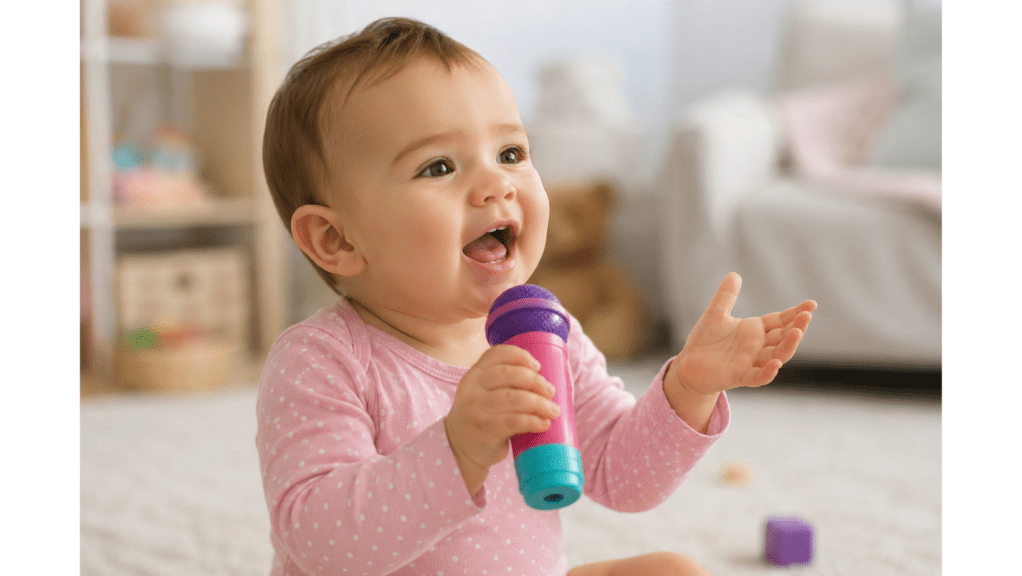
Have you ever wondered how your baby goes from tiny coos and babbles to saying, “Mama, I love you”? It may seem like it happens overnight, but language development begins long before your baby’s first word.
In fact, babies start learning language even before they are born. During the last trimester of pregnancy, they can hear the rhythm and melody of familiar voices, especially their mother’s. After birth, they quickly begin recognizing the voices of the people who love and care for them.
Although your baby won’t say recognizable words for many months, their brain is incredibly busy. Every conversation, lullaby, bedtime story, and playful interaction helps build the connections needed for speech and language. Think of it like filling a bucket—every word you speak adds another drop.
Babies learn language through everyday experiences. They are constantly watching your face, listening to your voice, studying your expressions, and observing how words connect to the world around them. When you smile and say, “There’s your bottle!” or point outside and say, “Look at the bird,” your baby is learning that words have meaning
Language develops through five simple experiences:
Listening
Before babies can talk, they spend months listening. They learn the sounds, rhythm, and patterns of language simply by hearing you speak throughout the day.
Watching
Babies carefully watch your mouth, facial expressions, and gestures. They notice how your lips move when you form words and often try to imitate those movements.
Responding
Long before they can say words, babies communicate by crying, smiling, cooing, babbling, pointing, and making eye contact. When you respond to these early attempts, you’re teaching them that communication is a two-way conversation.
Repetition
Hearing the same words over and over helps babies understand and remember them. Don’t worry about sounding repetitive—your baby learns through repetition. Saying, “Here’s your cup,” “Let’s wash your hands,” or “Time for bedtime” every day helps those words become familiar.
Play
Play is one of the most powerful ways babies learn language. Singing songs, reading books, pretending with toys, playing peek-a-boo, making animal sounds, and simply talking during play all encourage speech and communication in a fun, natural way.
You Are Your Baby’s Best Teacher
The wonderful thing about language development is that it doesn’t require expensive gadgets or perfectly planned lessons. The richest learning happens during ordinary moments—changing diapers, folding laundry, taking a walk, or cuddling together with a favorite book.
Every time you talk, sing, laugh, or respond to your baby’s sounds, you’re helping build their vocabulary, confidence, and communication skills. Those little everyday moments may seem ordinary now, but they are laying the foundation for a lifetime of learning.
As you read through the next ten strategies, remember this: you don’t need to be perfect. Your love, your attention, and your voice are the greatest gifts you can give your growing communicator.
Speech Milestones by Age
One of the most common questions parents ask is, “When should my baby start talking?” The truth is that communication begins long before a baby’s first word. Every smile, coo, babble, gesture, and giggle is an important step toward language development.
Keep in mind that every child develops at their own pace. Some babies are eager chatterboxes, while others spend more time listening before they begin to speak. These milestones are general guidelines, not strict
| Age | Typical Speech & Language Milestones |
|---|
| Birth–3 Months | • Startles or quiets to familiar voices • Makes eye contact during conversations • Coos and makes vowel sounds (“oo,” “ah”) • Cries differently for different needs • Smiles and responds to voices |
| 4–6 Months | • Laughs and squeals • Begins babbling (“ba,” “ma,” “ga”) • Turns toward sounds and voices • Responds to their name • Enjoys taking turns making sounds |
| 7–9 Months | • Babbles longer strings like “bababa” or “dadada” • Understands familiar words such as “no” or “bye-bye” • Uses gestures like reaching or raising arms • Looks at objects when you name them • Enjoys interactive games like Peek-a-Boo |
| 10–12 Months | • May say their first meaningful words such as “Mama” or “Dada” • Waves, points, and claps • Follows simple directions like “Come here” • Understands many more words than they can say • Imitates sounds and simple words |
| 12–18 Months | • Says 10–50 or more words (growth varies widely) • Names familiar people and objects • Follows one-step directions • Points to body parts or pictures in books • Tries to repeat new words they hear |
| 18–24 Months | • Vocabulary grows rapidly • Begins combining two words (“more milk,” “Daddy go”) • Understands simple questions • Enjoys singing along with familiar songs • Family members understand much of what they say |
Remember: Understanding Comes Before Talking
One of the most surprising facts about language development is that babies understand far more than they can say. Long before your child can speak in words, they’re building an impressive vocabulary by listening to conversations, observing daily routines, and connecting words with experiences.
For example, your baby may not be able to say the word “ball,” but they might crawl toward it when you ask, “Where’s your ball?” That’s a wonderful sign that language is developing!
When Should You Be Concerned?
Most children reach these milestones within a range of normal development. However, it may be worth discussing your concerns with your pediatrician or a speech-language pathologist if your child:
- Isn’t responding to sounds or familiar voices.
- Shows little or no babbling by around 9 months.
- Doesn’t use gestures like pointing or waving by around 12 months.
- Hasn’t said any meaningful words by around 16 months.
- Loses words or communication skills they previously had at any age.
Early support can make a significant difference, so don’t hesitate to ask questions if something doesn’t seem right. Remember, seeking guidance isn’t about labeling your child—it’s about making sure they receive the support they need to thrive.
Now that you know what language development typically looks like, let’s explore 10 proven strategies you can begin using today to encourage your baby’s speech through simple, playful interactions.
1. Talk to Your Baby Throughout the Day
If there’s one thing you do after reading this article, let it be this: talk to your baby—constantly.You don’t need flashcards, expensive toys, or perfectly planned lessons. Your everyday conversations are the greatest language-building tool your baby will ever have.Even though your baby can’t answer you with words yet, they’re listening. Every sentence you speak helps them learn new vocabulary, understand how language works, and connect words to the world around them.The best part? You don’t have to set aside extra teaching time. Simply narrate your day.As you’re getting your baby dressed, you might say:”Let’s put on your blue shirt. First one arm…now the other! You’re ready for the day.”
2. Read Together Every Single Day
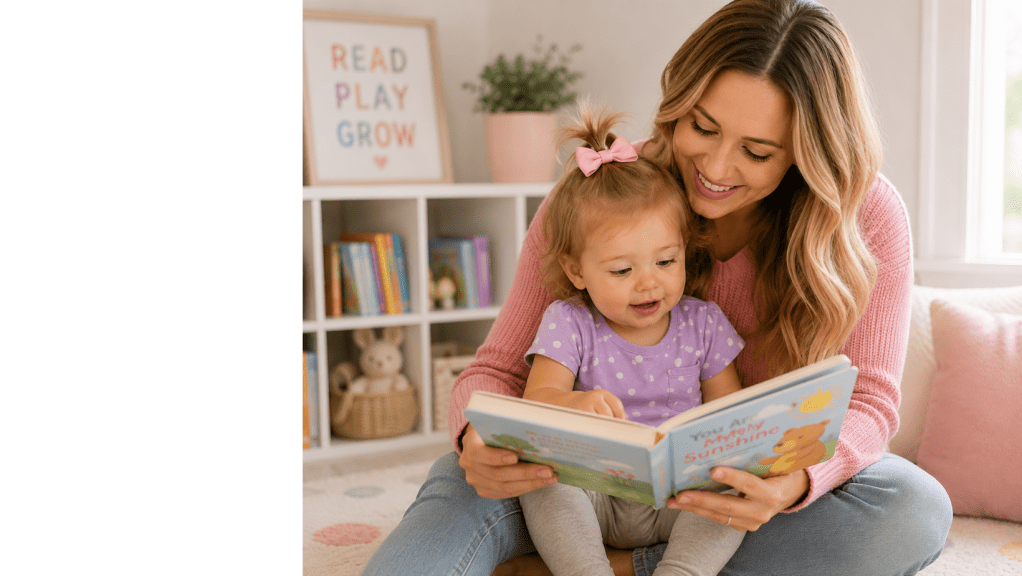
One of the easiest—and most enjoyable—ways to encourage speech is by reading together every day.
Even newborns benefit from hearing your voice as you read. They may not understand the story yet, but they’re learning the rhythm of language, hearing new vocabulary, and beginning to associate books with love, comfort, and connection.
You don’t need to finish every page or even read every word. In fact, with babies and young toddlers, it’s often better to slow down and enjoy the pictures together.
Point to objects and name them:
“Look! A big yellow duck.”
Ask simple questions, even if your baby can’t answer yet:
“Where’s the puppy?”
Choose books with:
- Bright, colorful pictures
- Real photographs of everyday objects
- Simple words
- Repeating phrases
- Rhyming text
- Lift-the-flap or touch-and-feel features
Reading the same favorite books again and again may seem repetitive to adults, but repetition helps babies recognize familiar words and begin predicting what comes next.
Most importantly, make reading a joyful experience. Snuggle close, use different voices, laugh together, and let your baby explore the book with all of their senses.
By making books a part of your daily routine from the very beginning, you’re laying the foundation for a lifelong love of reading—and giving your child a tremendous boost in language development.
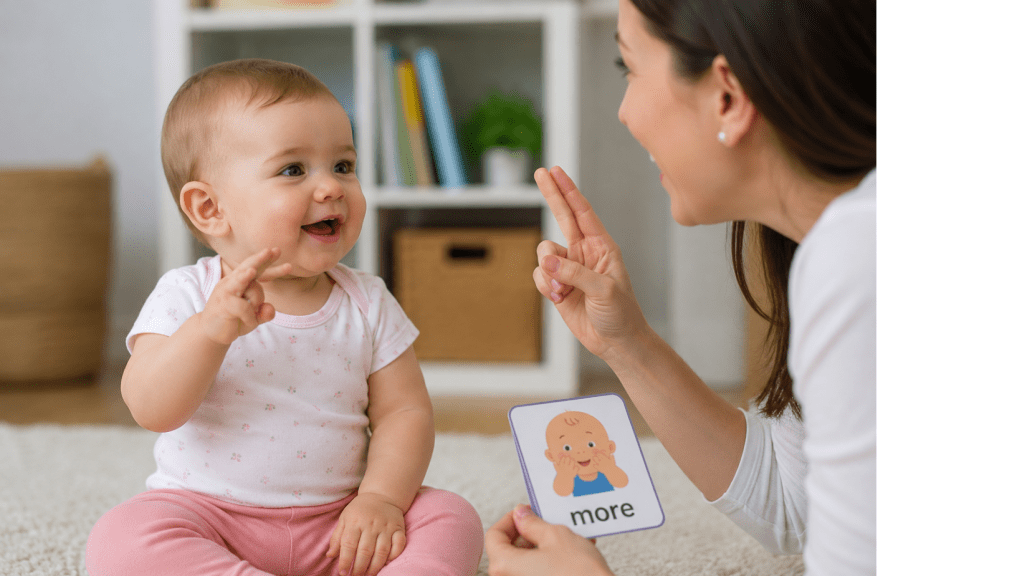
3. Teach Baby Sign Language as You Speak
One of my absolute favorite ways to encourage early communication is by introducing baby sign language. Before your baby is able to form words with their mouth, they can often communicate with their hands. Using simple signs alongside spoken words gives your child another way to express their needs, wants, and feelings—and it can make life a little less frustrating for both of you!
Baby sign language uses a small number of simple signs, many of which come from American Sign Language (ASL). You don’t need to learn an entire new language. Start with a handful of everyday signs and use them naturally as you talk to your baby.
For example, when you hand your baby a bottle, say the word “milk” while making the sign for milk. At snack time, say “more” as you make the sign. When your baby is finished eating, say “all done” and make the matching sign.
The key is to always say the word while making the sign. Your goal isn’t to replace spoken language—it’s to support it. Babies are hearing the word, seeing the sign, and connecting both to the experience happening in that moment
One of the biggest benefits of baby sign language is that it gives babies a way to communicate before they can clearly speak. Imagine your child being able to tell you they want more, they’re all done, or they would like milk instead of crying because they don’t yet have the words. Those simple signs can reduce frustration and help your baby feel understood.
Research has shown that using baby signs does not delay speech development. In fact, for many children, it supports language learning because they are repeatedly hearing the spoken word while making a meaningful connection with the sign.
Easy Signs to Start With
You don’t need dozens of signs. Begin with the words your family uses every day:
- Milk
- More
- All done
- Eat
- Drink
- Mommy
- Daddy
- Please
- Thank you
- Help
- Book
- Bath
- Sleep
Use these signs consistently during your daily routines. Repetition is what helps babies learn.
Make It Fun
Keep signing playful and pressure-free. Smile, make eye contact, and celebrate every attempt your baby makes—even if the sign isn’t perfect. Just as babies don’t pronounce words perfectly at first, they don’t always make signs perfectly either. What matters is that they’re learning to communicate.
Remember, communication starts long before clear speech. By pairing simple signs with spoken language, you’re giving your baby another bridge to express themselves while continuing to build the vocabulary they’ll use for years to come
4. Sing Songs and Nursery Rhymes Every Day
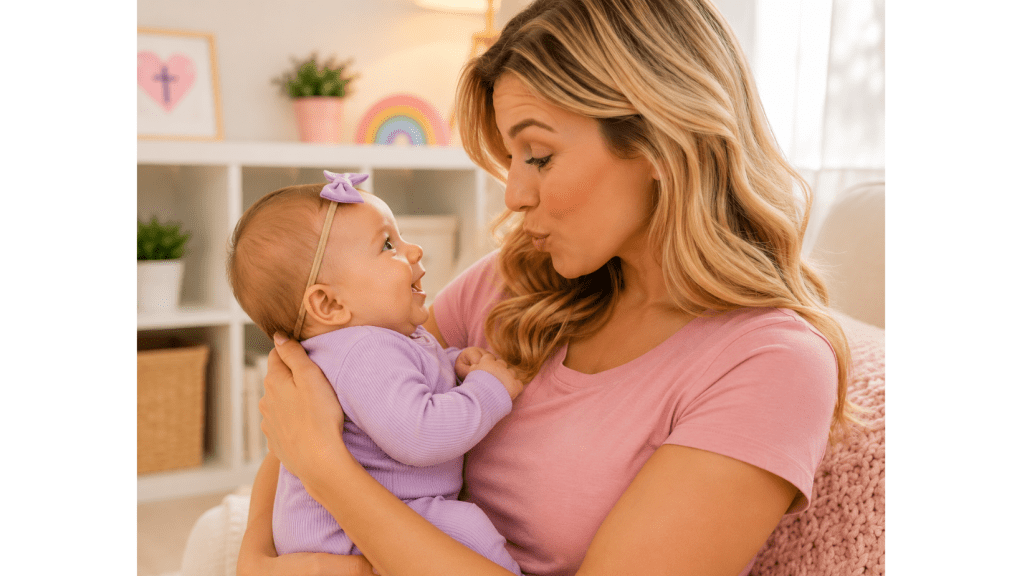
Don’t worry if you don’t have a beautiful singing voice—your baby already thinks you’re amazing! To your little one, the sound of your voice is comforting, familiar, and one of the most powerful tools for learning language.
Singing is much more than entertainment. It naturally slows down speech, emphasizes important words, and introduces rhythm and repetition—all of which help babies learn the sounds and patterns of language. In fact, many of the first words babies recognize come from songs and rhymes they hear over and over again.
Simple nursery rhymes and children’s songs are especially powerful because they repeat the same words and phrases. Every time your baby hears those familiar lyrics, they’re strengthening the connections in their brain that support speech and language development
5. Describe the World Around You
Your baby is constantly taking in the world through their eyes, ears, hands, and curiosity. One of the easiest ways to build language is to simply talk about what your baby is seeing, hearing, touching, and experiencing throughout the day.
Think of yourself as your baby’s tour guide. As you move through your daily routines, describe what’s happening around you.
Instead of walking quietly through the grocery store, you might say:
“Look at all the apples! These ones are bright red. Oh, here’s a bunch of yellow bananas. Can you see the oranges?”
While you’re outside on a walk, you could say:
6. Play Face-to-Face Every Day
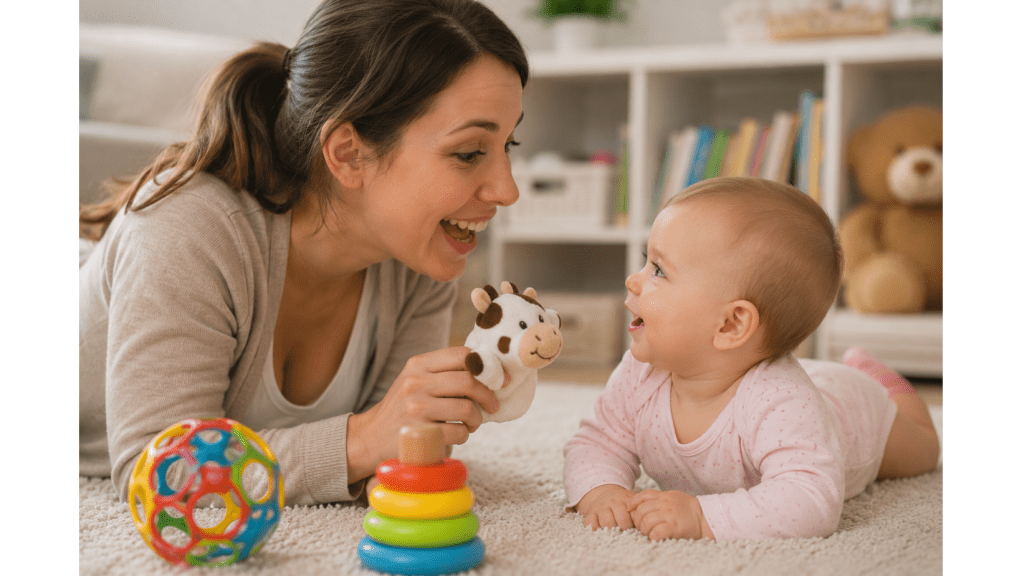
Play is often called the language of childhood, and for good reason. Before babies learn to speak with words, they communicate through smiles, eye contact, laughter, facial expressions, gestures, and sounds. When you take time to play face-to-face with your baby, you’re creating the perfect environment for speech and language to flourish.
Unlike watching a screen or playing alone, face-to-face play encourages real conversation. Your baby can see your mouth moving, watch your facial expressions, hear your voice, and practice taking turns communicating. These back-and-forth interactions teach one of the most important language skills of all—conversation.
Get Down on Your Baby’s Level
One of the best things you can do is simply sit on the floor with your baby.
Make eye contact.
Smile.
Talk.
Wait for your baby to respond with a coo, babble, smile, or gesture, then respond back. These “serve and return” interactions help build the brain connections that support communication and learning.
Your baby may not be using words yet, but they are already learning how conversations work
Try These Simple Language-Building Games
You don’t need fancy toys to encourage speech. Some of the best activities are the simplest.
Peek-a-Boo
This timeless game teaches babies to anticipate, laugh, and communicate. Pause before saying “Peek-a-boo!” and let your baby react.
Pat-a-Cake
Songs with hand movements encourage babies to imitate actions while hearing repeated words and rhythms.
Mirror Play
Sit together in front of a mirror. Point to your baby’s eyes, nose, ears, and mouth while naming each body part. Make funny faces and encourage your baby to copy you.
Animal Sounds
Pretend to be different animals together.
“Moo!”
“Roar!”
“Quack!”
Babies often imitate fun sounds before they can say complete words.
Bubbles
Blow bubbles and describe what you see.
“The bubbles are floating!”
“Pop!”
Wait for your baby to point, smile, or make a sound before blowing more.
Remember, Play Is Learning
To adults, it may look like you’re simply making silly faces, stacking blocks, or rolling a ball back and forth. But to your baby, these playful moments are building vocabulary, social skills, confidence, and communication.
Never underestimate the power of getting down on the floor, putting away distractions, and spending a few uninterrupted minutes playing together. Those joyful moments of connection are doing far more than creating memories—they’re helping your baby develop the communication skills they’ll use for the rest of their life
7. Create a Language-Rich Environment
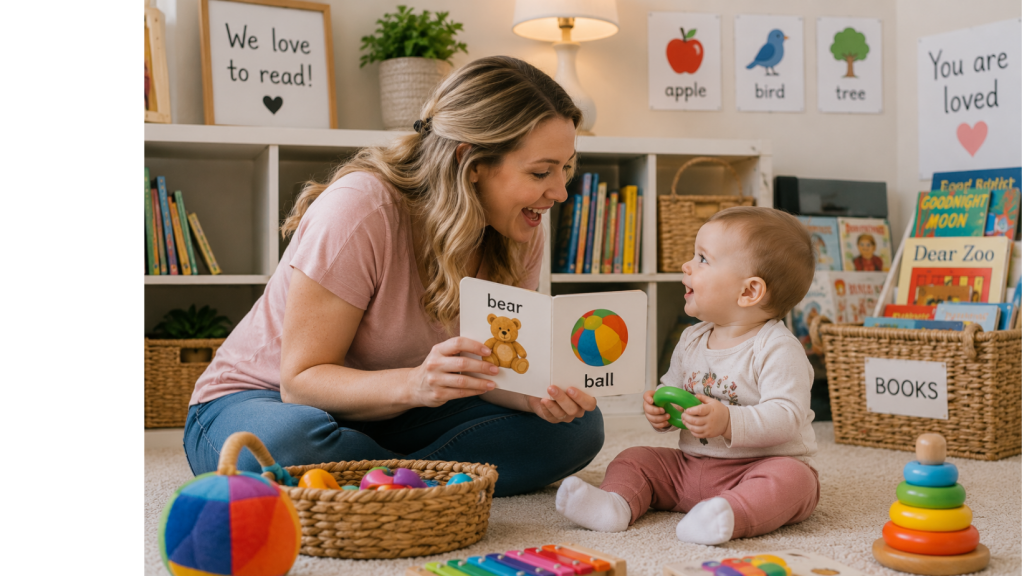
One of the greatest gifts you can give your baby is a home filled with words, conversation, books, music, and opportunities to communicate. The good news is that creating a language-rich environment doesn’t require expensive educational toys or a perfectly decorated playroom. It simply means surrounding your child with meaningful language throughout the day.
Babies learn best when language is part of everyday life. Every conversation, story, song, and playful interaction helps strengthen the brain connections needed for communication.
The more your baby hears words in loving, meaningful situations, the more opportunities they have to build vocabulary and understand how language works.
Fill Your Home with Books
Books should be easy for your child to see and reach. Keep a small basket of board books in the living room, nursery, and even the car so reading can happen anytime.
Read favorite books again and again. Repetition helps babies recognize words, remember stories, and build confidence as they begin anticipating what comes next.
Turn Off Background Noise
Many homes have the television on throughout the day, even when no one is actively watching. While it may seem harmless, constant background noise can compete with the conversations your baby needs to hear.
Instead, create moments of quiet where your baby can clearly hear your voice. Real conversations are one of the best teachers of language.
Make Everyday Conversations Count
You don’t need to plan special lessons. Simply invite your baby into your day by talking about what you’re doing.
While cooking:
“I’m cutting strawberries. They’re sweet and red.”
Surround Your Baby with Music
Play children’s songs, nursery rhymes, and gentle music throughout the day. Better yet, sing together! Music introduces rhythm, repetition, and new vocabulary while making learning joyful.
Label Objects and Actions
Help your baby connect words with the world around them by naming what they see and experience.
Instead of simply handing them a toy, say:
“Here’s your teddy bear.”
Encourage Conversation Throughout the Day
Even before your baby can answer with words, include them in family conversations.
Pause after speaking.
Smile.
Wait for a babble, a point, a sign, or even eye contact.
These little moments teach your child that communication is a two-way experience and that what they “say” matters.
Remember…
Creating a language-rich environment isn’t about doing more—it’s about making the most of the moments you’re already sharing together. Every bedtime story, every silly song, every walk around the neighborhood, and every conversation during dinner is helping your baby build the communication skills they’ll carry with them for the rest of their life.
8. Celebrate Every Attempt to Communicate
One of the best ways to encourage your baby to keep communicating is to celebrate every attempt they make. Whether it’s a smile, a point, a wave, a baby sign, a babble, or a first word, every effort is an important milestone on their language journey.
Remember, your baby is learning a brand-new skill. They won’t pronounce words perfectly at first, and that’s okay! Just as babies learn to crawl before they walk, they also learn to babble before they speak clearly.
Instead of focusing on saying words correctly, focus on encouraging your child’s desire to communicate
Expand What Your Baby Says
One simple technique that speech-language experts often recommend is called expansion.
Avoid Constant Corrections
It can be tempting to stop and correct every mispronounced word, but too much correction can make children hesitant to speak.
Confidence Comes Before Clear Speech
Children who feel heard and understood are often more willing to keep trying new words. By celebrating every attempt instead of expecting perfection, you’re helping build confidence, curiosity, and a love for communication.
Remember, every little sound, gesture, smile, and first word is another step toward meaningful conversation. So cheer them on, celebrate the little victories, and enjoy this incredible season of discovery. Your encouragement today is helping your baby become a confident communicator tomorrow
Final Thoughts
The conversations you have while preparing dinner, the songs you sing before bedtime, the books you read together, the games you play on the living room floor, and the smiles you exchange all help your baby develop the confidence and skills they need to communicate. Language grows through connection.
As you begin using these strategies, remember that progress doesn’t happen overnight. Every child develops at their own pace, and that’s perfectly okay. Some babies begin talking early, while others spend more time listening, observing, and communicating through gestures before their words begin to bloom. Celebrate each milestone, no matter how small, because every coo, babble, sign, point, and first word is a sign that your baby is learning.
Most importantly, enjoy this season. These early years pass quickly, and the simple moments you share today are laying the foundation for a lifetime of learning, confidence, and connection.
At Mumma’s Babies, I believe children learn best through play, meaningful experiences, and loving relationships. My hope is that these strategies encourage you to slow down, enjoy the little moments, and recognize that you already have everything you need to help your baby become a confident communicator.
So keep talking, keep reading, keep singing, keep playing, and keep celebrating every new word along the way. Your voice is one of your baby’s favorite sounds, and every conversation you share is helping them discover their own.
Helping little hearts learn through love and play
-Velvet Mumma


Leave a Reply